Afbeelding
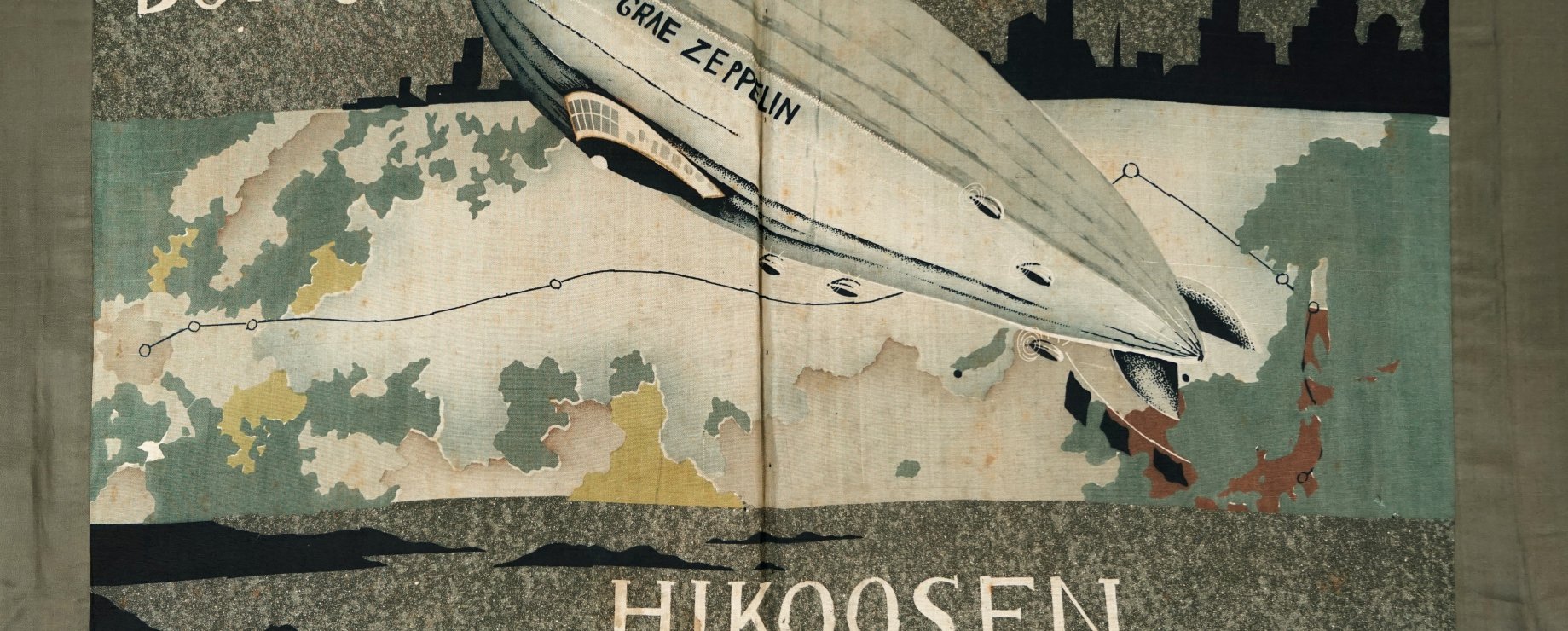


In this article, Luca van Leeuwen explores the story behind the fascinating kimonos that were designed in commemoration of the LZ 127 Graf Zeppelin that landed in Tokyo in 1929.

Image 4: Under-kimono for men in honour of the circumnavigation of the Graf Zeppelin. ca. 1929, printed cotton, 130 x 109 cm. © The Phoebus Foundation, Antwerp
By Luca van Leeuwen
The 1920s was an era of tremendous aeronautical advances on an international scale. While air supremacy had proven invaluable in war during the previous decade, the two decades of airplane innovation after WWI are dominated by feats of corporate interest and civilian daring. The speed promised by air travel was unparallelled; reaching the other side of the world in mere days as opposed to months would be revolutionary, and sparked the fantasies of everyone who dreamt of travelling the world.
This was no different, of course, in Japan. The west – its inventions, its style, its products; but also its power and its imperialism – had without question become hip and trendy, and a significant cultural focus. Air travel brought the world closer; and this made it a powerful unifying force, for the progressives, the militarists, old and young, all saw its value for society and were fascinated by its potential.